


District Council Approve 2040/2050 Net Zero Target
At a full council meeting on 2nd November, Mid Sussex District Council voted by a vast majority, to approve a range of net zero targets. With echoes of the global debate about to start at COP27, the Greens and Liberal Democrats pushed for real action while Conservative members praised housing developments where there had been a claimed net increase in biodiversity and highlighted Britain's 'minor role' in current emissions.
The Mid Sussex Climate Coalition asked a public question at the start of the session. This questioned why our 'council only' targets were not following the example of other areas with a target date of 2030. This was followed up by a second supplementary question on what was being done to pressure national government into action. Full write up to follow.
Watch the council meeting here.
The document under discussion is here.
More on the SES and Ricardo Report from us is here.
The next stage of the process is to produce a plan to work towards these now approved targets. This should be complete 'by 2023'.
With this motion now approved, our council now has;
A) A District-wide net zero target aligned to the national target [2050].
B) A Council-only net zero target of 2040 for emissions the Council can directly control.
C) A Council-only net zero target aligned to the national target for emissions the Council can only indirectly influence.
From the debate:
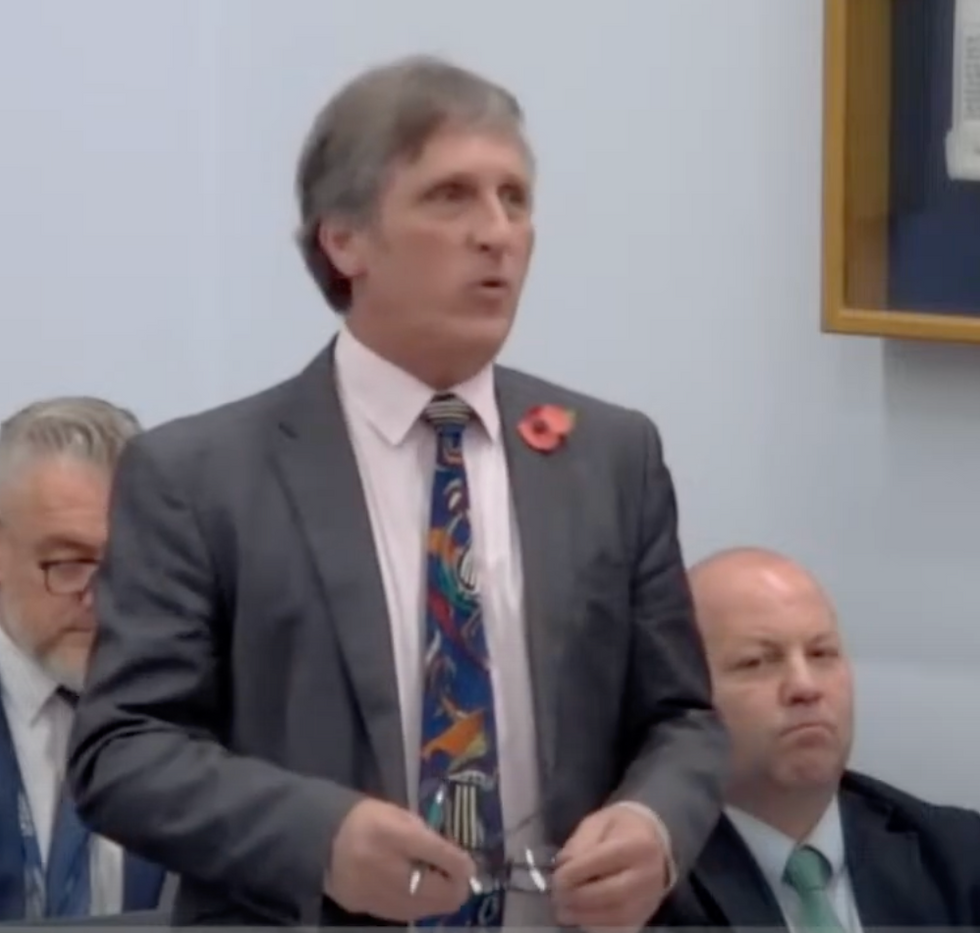
Steve Hillier, Conservative, Cabinet Member for Economy & Net Zero, said the dates in the proposal were end dates and he'd like everyone to move 'as quickly as possible to reduce emissions as soon as possible'.
He continued saying that the ability to reach the targets though still relies on government policy on planning, transport and energy. They must be affordable and must bring the community with them.

Green councillor Paul Brown accused the council of using this report to simply kick the can down the road. Developments are still being built with gas boilers and no space for hot water tanks (needed for future fitting of heat pumps). He asked if this will change with the new DPS2 policy?
The Ricardo report estimated a 9% drop in car use by 2030. Paul asked where this drop was going to come from as he'd seen no action in this area during his time in council. Active travel and the '20 minute town' ideas must be included, Paul concluded.

Also from the Green Party, councillor Anne Eves countered Steve Hillier's claim that the UK were global leaders. The head of the government's own Committee on Climate Change had recently said that the targets were good but delivery appalling. She continued, we have missed the boat on 1.5 degrees and the council showed no ambition on climate change. 'Actions speak louder than targets'.

Another Green, Jenny Edwards, quoted the Carbon Literacy Project saying that to achieve targets we really need a change in culture. She asked what measures were in place at the council to ensure we had the right culture to be able to achieve these targets.

Environment, conservation and development export, Liberal Democrat Benedict Dempsey, countered previous claims on Britain's good record by reminding council of our historic role in pumping out greenhouse gases since the start of the industrial revolution. Dempsey said the idea of asking developing countries to lead the way could be compared to asking someone to share the whole bill for a meal, when they had only been there at the end for the coffee.
His main point was to question the Ricardo report's assumption of land as a carbon sponge. The report has no modelling for this but change of land use is one area where the council does have power. He urged us in future to get a proper handle of this subject.

Conservative councillor Rex Whittaker highlighted a recent visit to a Homes England site at Brooklyn East and Brookly West [I'm unable to locate these] where the developers had achieved a biodiversity net gain of 23%.

Conservative John Belsey, did not agree that the council had done nothing for the last three years. He highlighted the food waste trial as an example of 'us leading in West Sussex'.
He said the Mid Sussex Local Cycling & Walking Infrastructure Plan (LCWIP) would come out very soon and be part of a wider Sussex plan. The council had also done good work [simply not cutting the grass] with the Blue Hearts rewilding sites. He claimed the targets set out in the motion, 2040 for council controlled emissions, and 2050 for all others, provide a sensible way for the council to reduce emissions and act in line with national targets.


Comments